
Blogs & News
January 10, 2026
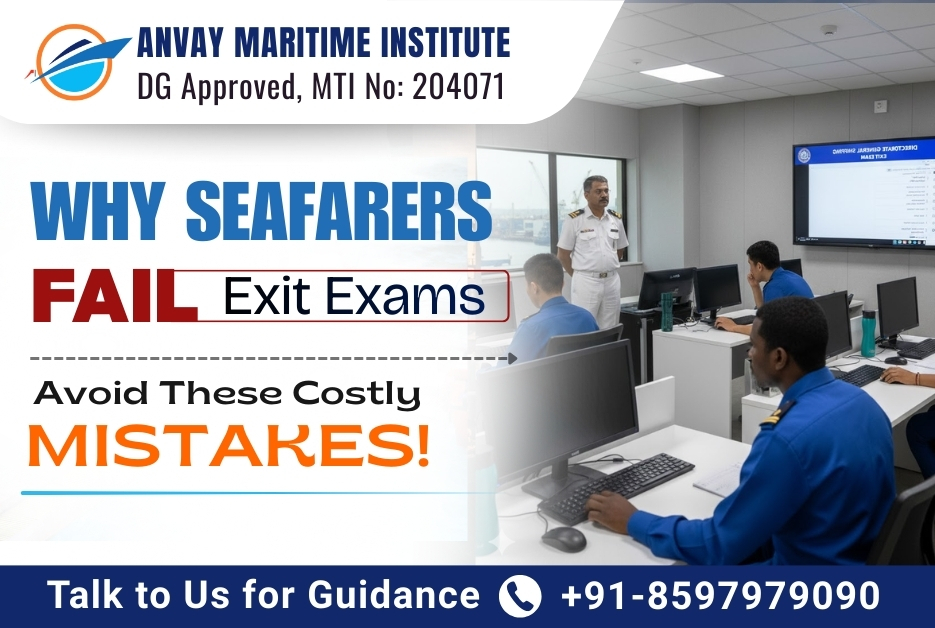
The DG Shipping Exit Exam is a crucial milestone for seafarers in India. Clearing this exam is mandatory to validate training, upgrade certification, and progress in a maritime career. Despite completing required courses, many candidates fail the exit exam every year—not due to lack of intelligence, but because of avoidable mistakes, poor planning, and misunderstanding of exam expectations.
This blog explains the top reasons seafarers fail their exit exam and provides practical solutions to avoid these mistakes, helping candidates prepare effectively and clear the exam with confidence.
What Is the DG Shipping Exit Exam?
The DG Shipping Exit Exam is conducted to assess whether a seafarer has:
-
Understood STCW course content
-
Gained practical safety knowledge
-
Met competency standards required for shipboard duties
It applies to candidates completing:
-
STCW courses
-
Pre-sea and post-sea training
-
Certain modular maritime programs
Passing the exit exam is essential for certificate issuance, endorsement, and further career progression.
Top Reasons Seafarers Fail Their Exit Exam
1. Lack of Conceptual Understanding
Many candidates rely on rote learning instead of understanding:
-
Safety procedures
-
Emergency response actions
-
Firefighting principles
-
Survival techniques
The exit exam tests application-based knowledge, not memorization. Candidates who do not understand why a procedure is followed often fail scenario-based questions.
How to avoid this:
Focus on understanding concepts instead of memorizing answers. Ask instructors to explain real shipboard situations.
2. Ignoring Practical Training
STCW courses involve hands-on training such as:
-
Fire drills
-
Liferaft launching
-
Survival swimming
-
Use of breathing apparatus
Candidates who treat practical sessions casually struggle in the exam because practical knowledge directly reflects in written and oral assessments.
How to avoid this:
Participate actively in all drills. Treat practical sessions as real emergency simulations.
3. Poor Time Management During Exam
Many candidates know the answers but fail due to:
-
Spending too much time on one question
-
Not reading questions carefully
-
Rushing in the last section
This leads to incomplete answers and unnecessary errors.
How to avoid this:
Practice mock tests under time limits. Learn to move on if a question is unclear and return later.
4. Not Referring to DG Shipping–Aligned Study Material
Some students prepare using outdated notes or unofficial sources that:
-
Do not follow current STCW syllabus
-
Contain incorrect procedures
-
Miss recent DG Shipping updates
This mismatch leads to incorrect answers.
How to avoid this:
Study material provided by DG Shipping–approved maritime institutes and updated course manuals only.
5. Weak Understanding of Safety Terminology
Maritime exams use precise terminology. Confusion between terms like:
-
Muster station vs Assembly station
-
Fixed fire system vs Portable extinguisher
-
Immersion suit vs Lifejacket
can lead to wrong answers even if the concept is known.
How to avoid this:
Learn standard maritime terminology as per STCW conventions and IMO guidelines.
6. Skipping Revision Before Exam
Many candidates assume course completion is enough and skip revision, leading to:
-
Forgetting key procedures
-
Confusion during exam
-
Low confidence
How to avoid this:
Revise notes at least 2–3 times before the exam. Focus on emergency procedures and safety steps.
7. Exam Anxiety and Overthinking
Stress, fear of failure, and lack of confidence cause:
-
Blank-outs
-
Misreading questions
-
Panicked decision-making
How to avoid this:
Practice regularly, stay calm, and remember that the exam tests basic safety competence, not advanced theory.
8. Underestimating the Exit Exam
Some candidates think the exit exam is “easy” and prepare casually. This overconfidence often results in failure.
How to avoid this:
Treat the exit exam seriously. Prepare as if it directly affects your next ship joining—because it does.
How to Prepare Effectively for the Exit Exam
Understand the Syllabus Clearly
Know which topics are included:
-
Fire prevention and firefighting
-
Survival techniques
-
First aid basics
-
Personal safety and responsibility
Attend All Classes and Practical Sessions
DG Shipping places heavy emphasis on attendance and participation.
Ask Questions
Never hesitate to clarify doubts with instructors—especially those with sailing experience.
Practice Mock Tests
Mock exams help you:
-
Improve speed
-
Identify weak areas
-
Reduce exam fear
Role of the Training Institute in Exam Success
Institutes with:
-
Experienced maritime faculty
-
Structured training methods
-
Exam-oriented teaching
produce higher pass percentages. Choosing the right institute significantly improves exit exam success.
Conclusion
Most seafarers fail the DG Shipping Exit Exam not due to lack of ability, but because of avoidable mistakes like poor preparation, weak conceptual understanding, and casual attitude. By focusing on fundamentals, participating in practical training, and preparing strategically, candidates can clear the exam confidently.
Institutes like Anvay Maritime Institute emphasize practical learning, exam readiness, and DG Shipping–aligned training—helping students succeed without unnecessary stress.